
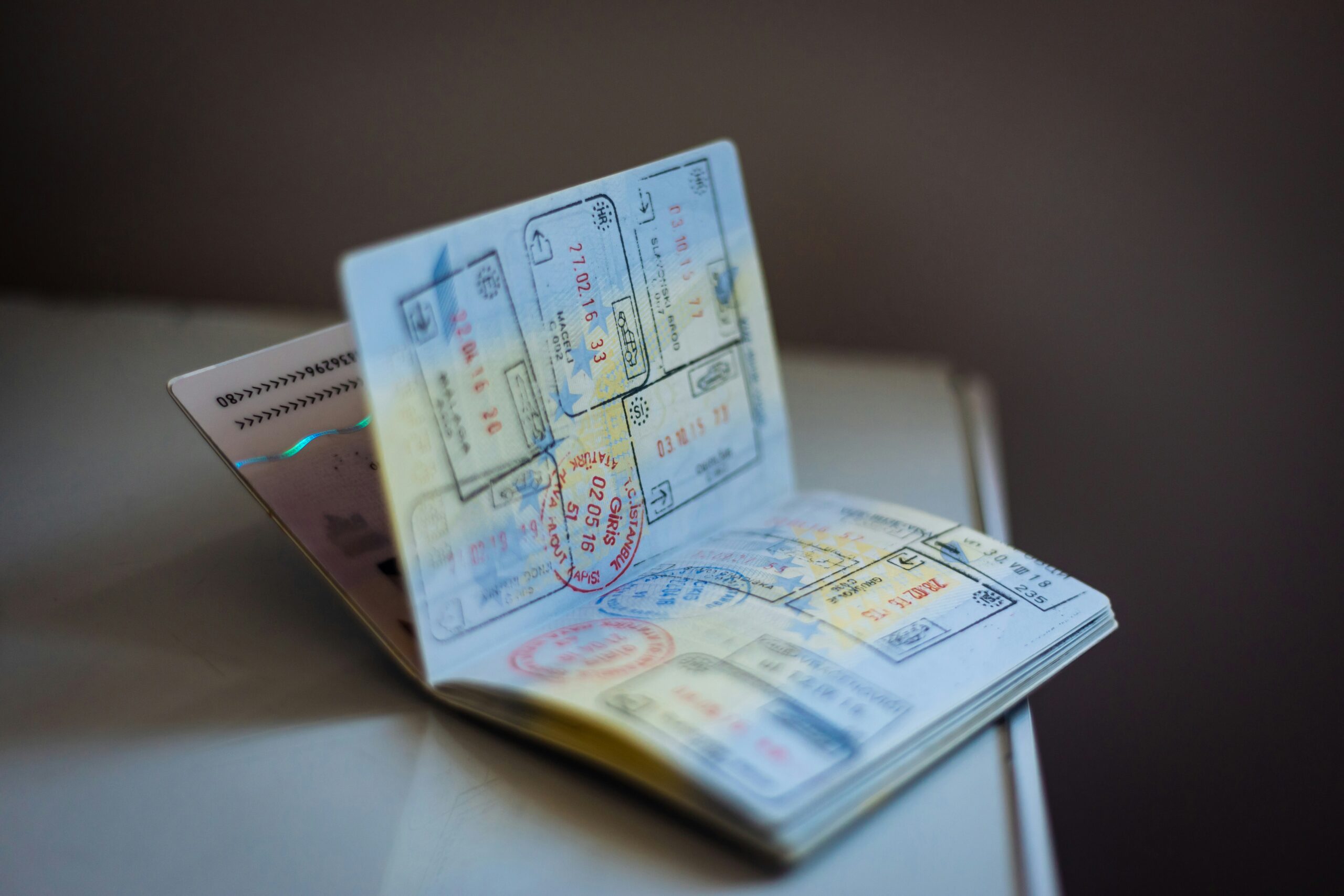
Overstaying a Visa in Turkey
Overstaying a visa in Turkey may lead to serious immigration consequences for foreign nationals. A visa overstay may result in an administrative fine, entry ban, deportation decision, restriction code, future visa problems, and difficulties in residence permit or work permit applications.
However, not every visa overstay has the same legal result. The consequences depend on several factors, including the length of the overstay, whether the foreign national leaves Turkey voluntarily, whether the administrative fine is paid, whether the violation is detected by the authorities, whether a deportation decision is issued, and whether the person has previous immigration violations.
Visa overstay cases should be assessed under Law No. 6458 on Foreigners and International Protection, the rules on legal stay, deportation, and entry bans, and where litigation is necessary, Law No. 2577 on Administrative Procedure.
What Is Visa Overstay in Turkey?
Visa overstay occurs when a foreign national remains in Turkey after the expiry of their visa, visa exemption period, residence permit, work permit, or work permit exemption.
A foreign national may overstay in Turkey if they:
- remain after their visa expires,
- exceed their visa exemption period,
- stay beyond the permitted 90/180-day rule where applicable,
- remain after a residence permit expires,
- fail to leave after a residence permit extension application is rejected,
- continue staying after cancellation of a residence permit,
- remain after the expiry of a work permit or work permit exemption.
Overstay should not be treated as a minor technical issue. Even a short overstay may create administrative consequences, and longer overstays may lead to entry bans or deportation proceedings.
What Happens If a Foreigner Overstays a Visa in Turkey?
The consequences of overstaying a visa in Turkey may include:
- administrative fine,
- obligation to leave Turkey,
- entry ban,
- deportation decision,
- restriction code,
- difficulty obtaining a new visa,
- difficulty obtaining a residence permit,
- problems at border gates,
- future immigration record issues.
The practical result depends heavily on whether the foreign national leaves voluntarily before being detected and whether they pay the administrative fine.
Is There an Administrative Fine for Visa Overstay?
Yes. Foreign nationals who violate their legal stay in Turkey may be required to pay an administrative fine when leaving Turkey or when the violation is processed by the competent authorities.
The amount of the fine depends on factors such as:
- nationality,
- duration of overstay,
- type of legal stay violation,
- applicable fee rules,
- whether previous violations exist.
The fine should be paid properly and documented. Failure to pay the fine may create additional problems for future entry into Turkey.
Does Visa Overstay Always Lead to an Entry Ban?
No. A visa overstay does not always lead to an entry ban. The result depends on the duration of the violation and whether the foreign national complies with the exit and fine-payment rules.
For foreign nationals who violate their legal stay for less than 3 months and voluntarily go to the border gate before the violation is detected by the authorities, an entry ban is not imposed if the administrative fine is paid.
The same applies to foreign nationals who violate their legal stay for less than 3 months, are issued a deportation decision, leave Turkey within the period granted to them, and pay the administrative fine.
Therefore, voluntary exit and payment of administrative fines may significantly affect future entry consequences.
Entry Ban Periods for Visa Overstay in Turkey
Where the legal stay violation reaches 3 months or more, entry bans may be imposed even if the foreign national voluntarily exits and pays the administrative fine.
For foreigners who violate their legal stay for 3 months or more and voluntarily leave Turkey before being detected by the authorities, the entry ban periods are applied according to the duration of the violation:
- 3 months – 6 months: 1-month entry ban,
- 6 months – 1 year: 3-month entry ban,
- 1 year – 2 years: 1-year entry ban,
- 2 years – 3 years: 2-year entry ban,
- more than 3 years: 5-year entry ban.
In this context, entry bans may reach up to 5 years depending on the length of the overstay.
What If the Foreigner Does Not Pay the Overstay Fine?
Failure to pay the administrative fine may lead to more serious entry ban consequences.
If a foreign national violates the legal stay period and does not pay the administrative fine when leaving Turkey, an entry ban may be imposed. In practice, unpaid fines and deportation-related expenses may also create problems during later visa, border, or residence permit procedures.
For this reason, foreign nationals who have overstayed should keep proof of payment and should check whether any restriction, entry ban, or unpaid debt remains in their immigration record before attempting to return to Turkey.
Can Visa Overstay Lead to Deportation?
Yes. Visa overstay may lead to a deportation decision under Law No. 6458 on Foreigners and International Protection.
Under Law No. 6458, foreign nationals may be subject to deportation if they overstay their visa or visa exemption period for more than 10 days, or if their visas are cancelled. Foreign nationals whose residence permits are cancelled, or who overstay the expiry date of their residence permit for more than 10 days without an acceptable reason, may also face deportation.
This 10-day rule is very important. Foreign nationals should not assume that visa overstay only results in payment of a fine. Depending on the case, it may also trigger deportation proceedings.
What Is the Deadline for Challenging a Deportation Decision?
If a deportation decision is issued because of visa overstay, the foreign national must act quickly.
A lawsuit against a deportation decision must be filed before the administrative court within 7 days from notification of the decision to the foreign national, their legal representative, or their lawyer.
This 7-day period is regulated under Law No. 6458 on Foreigners and International Protection and is much shorter than ordinary administrative litigation deadlines. Missing this deadline may cause serious loss of rights.
What Is the Deadline for Challenging an Entry Ban?
If a separate entry ban decision is notified, a lawsuit against the entry ban must be filed before the administrative court within 60 days from written notification under Law No. 2577 on Administrative Procedure.
This deadline is different from the 7-day deportation lawsuit period. Therefore, the exact administrative act must be identified:
- deportation decision: 7 days from notification,
- entry ban decision: 60 days from written notification,
- administrative detention: application before the Criminal Judgeship of Peace while detention continues.
Can a Foreigner Be Held in a Removal Center After Visa Overstay?
Yes, in some cases. If a deportation decision is issued and administrative detention is considered necessary, the foreign national may be transferred to a Removal Center.
Administrative detention in a Removal Center may last up to 6 months. If deportation procedures cannot be completed because the foreign national does not cooperate or does not provide accurate information or documents concerning their country of return, this period may be extended for an additional 6 months.
Administrative detention is not challenged before the administrative court. It is challenged before the Criminal Judgeship of Peace. There is no fixed statutory deadline for applying to the Criminal Judgeship of Peace while detention continues. After the application is made, the judge must decide within 5 days.
What If the Overstay Is Less Than 10 Days?
A short overstay should still be taken seriously. Even if a foreign national overstays for a short period, the fine and legal-stay consequences should be reviewed.
The 10-day period is particularly important in deportation risk analysis. Overstaying a visa or visa exemption period for more than 10 days may bring the foreign national within the scope of deportation provisions under Law No. 6458. If the overstay is shorter, the case still needs to be evaluated based on the foreign national’s visa type, payment of fines, prior violations, and whether any administrative decision has been issued.
What If the Overstay Is Less Than 3 Months?
If the foreign national violates the legal stay period for less than 3 months, voluntarily goes to the border gate before the violation is detected, and pays the administrative fine, an entry ban is not imposed.
This rule is very important for foreign nationals who realize that they have overstayed and wish to leave Turkey properly. Leaving voluntarily and paying the fine may prevent an entry ban in less-than-3-month overstay cases.
What If the Overstay Is More Than 3 Months?
If the overstay is 3 months or more, entry ban consequences become more serious. Even where the foreign national voluntarily leaves and pays the administrative fine, an entry ban from 1 month to 5 years may be imposed depending on the length of the violation.
For long overstays, legal review is important before attempting to return to Turkey. The foreign national should check whether:
- an entry ban exists,
- the administrative fine was paid,
- a deportation decision was issued,
- a restriction code was entered,
- there are unpaid deportation expenses,
- a special annotated visa is necessary,
- a residence permit application is possible after lawful re-entry.
Can a Foreigner Apply for a Residence Permit After Overstaying?
This depends on the person’s legal status and the timing of the application.
A foreign national who has already overstayed may face difficulties applying for a residence permit from within Turkey. If the person no longer has a valid visa, visa exemption period, or lawful basis for stay, the residence permit strategy must be assessed carefully.
In some cases, the person may need to leave Turkey, pay the administrative fine, and later re-enter lawfully. In other cases, if a residence permit rejection, deportation decision, or entry ban has been issued, those decisions may need to be challenged or resolved first.
Overstay may also negatively affect future residence permit applications because the administration may evaluate prior immigration compliance.
Can Overstay Affect Future Visa or Work Permit Applications?
Yes. Visa overstay may affect future immigration procedures in Turkey.
A foreign national with an overstay record may face:
- visa refusal,
- additional border questioning,
- residence permit rejection,
- work permit-related difficulties,
- special annotated visa requirement,
- entry ban consequences,
- restriction code problems.
If a work permit or residence permit application is planned after overstay, the previous violation should be addressed clearly and all fines, entry bans, or restriction codes should be checked.
What Documents May Be Important in a Visa Overstay Case?
The necessary documents depend on the case. However, the following documents may be important:
- passport copy,
- visa or e-visa document,
- entry-exit records,
- residence permit documents,
- residence permit application records,
- work permit records where relevant,
- administrative fine payment receipt,
- deportation decision, if any,
- entry ban decision, if any,
- restriction code information,
- notification documents,
- documents showing family life in Turkey,
- medical reports where relevant,
- documents showing lawful reason for delay or inability to leave.
Documents are especially important if the foreign national is challenging a deportation decision, entry ban, or residence permit rejection connected to overstay.
Why Is an Immigration Lawyer Important?
Visa overstay cases may appear simple, but they can quickly become complex if deportation, entry ban, restriction codes, unpaid fines, or residence permit issues arise.
An immigration lawyer in Turkey may assist with:
- calculating the overstay period,
- assessing deportation risk,
- checking whether a fine must be paid,
- reviewing entry ban consequences,
- challenging a deportation decision within the 7-day deadline,
- challenging an entry ban within the 60-day deadline,
- examining residence permit options,
- evaluating special annotated visa possibilities,
- reviewing Removal Center and administrative detention issues,
- preparing evidence where the overstay resulted from special circumstances.
Because even a technical overstay can affect future legal status, the case should be reviewed before the foreign national leaves Turkey or attempts to re-enter.
Conclusion
Overstaying a visa in Turkey may lead to administrative fines, entry bans, deportation decisions, restriction codes, and future residence permit or visa problems. The consequences depend on the length of the overstay, whether the foreign national leaves voluntarily, whether the administrative fine is paid, and whether a deportation or entry ban decision is issued.
If the overstay is less than 3 months, the foreign national may avoid an entry ban by voluntarily leaving before detection and paying the administrative fine. If the overstay reaches 3 months or more, an entry ban from 1 month to 5 years may be imposed depending on the duration of the violation.
Visa or visa exemption overstay for more than 10 days may also create deportation risk under Law No. 6458 on Foreigners and International Protection. A deportation decision must be challenged within 7 days from notification, while an entry ban decision must be challenged within 60 days from written notification under Law No. 2577 on Administrative Procedure.
For foreign nationals who have overstayed in Turkey, timely legal review is essential. A careful strategy can help reduce future entry problems, protect legal rights, and determine whether litigation, payment of fines, departure, re-entry, or residence permit planning is necessary.